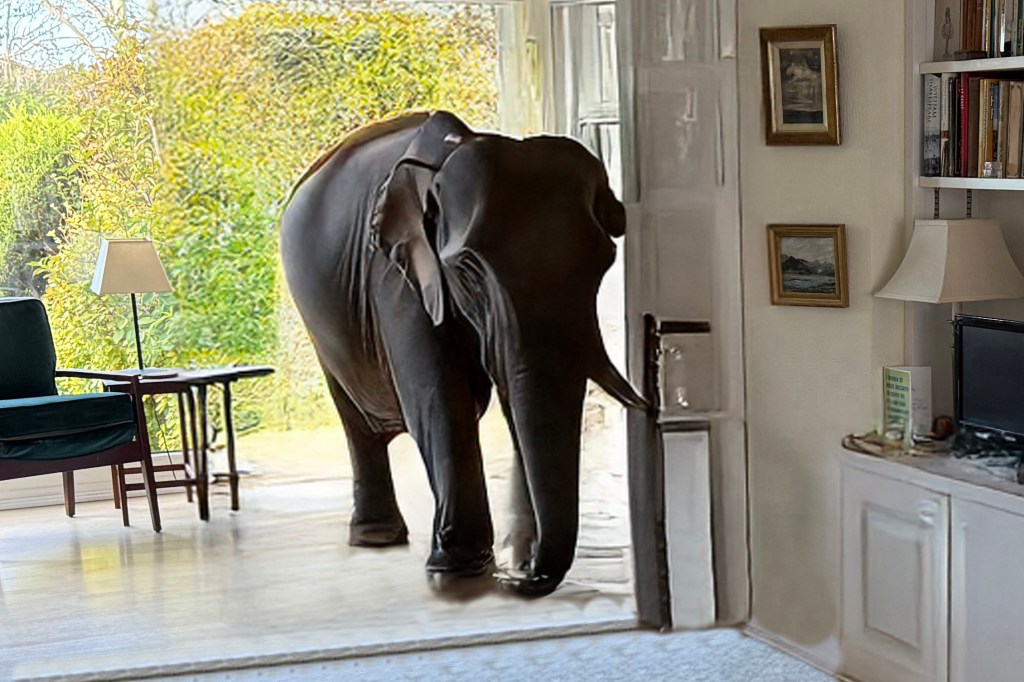
… the elephant in the room
There was a time in the age of film when we thought the camera could never lie. Those thoughts are now confined to the dark room of history as digital photography and the capabilities of image editing software have brought about fundamental and very significant changes to in-camera and post-production processes. The use of basic editing tools and simple filters, which improve or change the look of a photograph, have become the norm. More recently, the incorporation of sophisticated masking tools enables selective editing of different parts of an image. AI algorithms are now becoming common place in image editors in order to enhance or correct technical defects in an image, generative AI can be used to add content to change the subject matter in the image, and some manufacturers are now providing the facility to pre-load a photographic style in to the camera.
In the same way that digital technologies have opened up unimagined possibilities in so many of life’s activities, photography is starting to feel the full impact of the transition from film. Film still has its advocates, and rightly so. There remains a particular quality in analogue images and darkroom techniques, that digital doesn’t quite achieve. Dodging, burning and retouching were basic tools used in the darkroom to enhance an image, but the digital world has opened up endless possibilities, and it is entirely up to the photographer, and his/her preferred workflow, to what extent the image can be adjusted to either achieve an accurate representation of the subject, or whether it becomes the starting point for a more creative or artistic rendering of the image, opening the door to a somewhat more creative genres of photography.
The use of AI algorithms to enhance an image by removing noise, improving sharpening, and removing artefacts that detract, generally feels acceptable, as this is primarily about ‘cleaning up an image. But generative AI is somewhat more controversial as the emphasis is about making far more fundamental changes, or even adding content to an image. This can result in the image no longer feeling representative of the subject as it appeared in the viewfinder. This can be quite acceptable depending on the photographer’s objective, particularly if the legitimate objective is to produce something creative, artistic, or even surreal.
However, images can be adjusted to convey something considerably different to what was recorded in the raw file taken off the camera for quite dubious reasons. Generative AI adds to the photographer’s toolkit, but depending on the objective it inevitably raises the questions about the provenance of the image and the purpose for which it is being used. For most of us in the amateur world, it’s not of great consequence, particularly if we are being honest about how we have edited the image. However, when it comes to photojournalism, mainstream media, and in some cases, social media, where authenticity is a fundamental expectation and the adjustment of an image to portray something that is not a true subject, the stakes can be considerably higher putting reputations at risk, and raising the possibility of financial, commercial, and legal consequences.
For all of the amazing advances in image capture and image editing, in the wrong hands, generative AI is the elephant in the room.

 PHASEFIVE
Leave a comment